Top 10 Pharma
Enhancing MSL (Medical Scientific Liaison) Experience and Impact
Case Study
At a glance
How did we go from “If the situation is this bad, I’d quit” to “Probably one of the best pieces of discovery I've seen”?
Simple, with a relentless focus on user needs, storytelling, and future opportunities.
Client
Top 10 Pharma
Sector
Health & Life Sciences
Project
Employee experience
Activities
Qualitative user research
User journey management
Workshop design & facilitation
Feasibility assessment
Roadmap definition
Storytelling
Vision design
Technologies
JourneyTrack
Mural
Dovetail
Figma
Balancing science and personal relations
Medical Science Liaisons (MSLs) are a crucial part of Medical teams, engaging with Healthcare Professionals (HCPs), sharing the latest science with them, and collecting market insights.
The Enhance MSL Impact & Experience initiative aimed to improve the effectiveness of MSLs by increasing their satisfaction with systems, expanding their capacity, and enhancing the quality of their interactions.
During the engagement, we used a mix of Design Thinking methodologies to gain a comprehensive understanding of current MSL workflows, identify pain points, and uncover opportunities for improvement.
Global research
16 semi-structured interviews were conducted, informed by a tool ecosystem discovery. Main research findings were validated in separate workshops with MSLs from multiple regions.
A set of ideation workshops with key subject matter experts soon followed. We validated the large number of identified opportunities with technical teams and MSLs, resulting in a prioritized roadmap and a north-star vision.
This is quite impressive. Probably one of the best pieces of discovery I've seen, actually.
Senior Director, Head of Data, Digital and Tech
Journey management
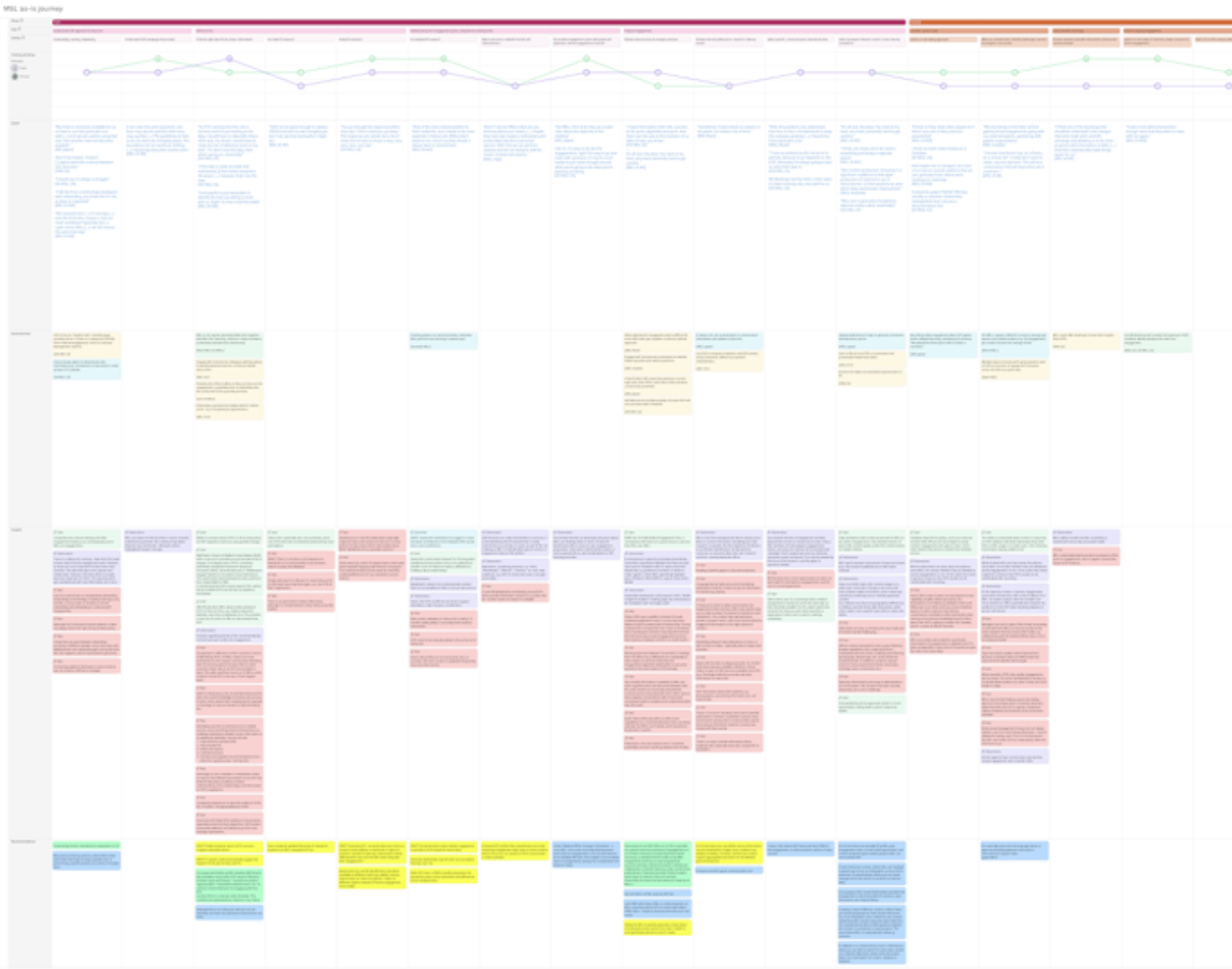
We relied on the user journey management tool JourneyTrack to combine research findings and create a robust foundation to bridge research, ideation, and roadmap. We made the daunting amount of information relatable, digestible, and actionable with storytelling:
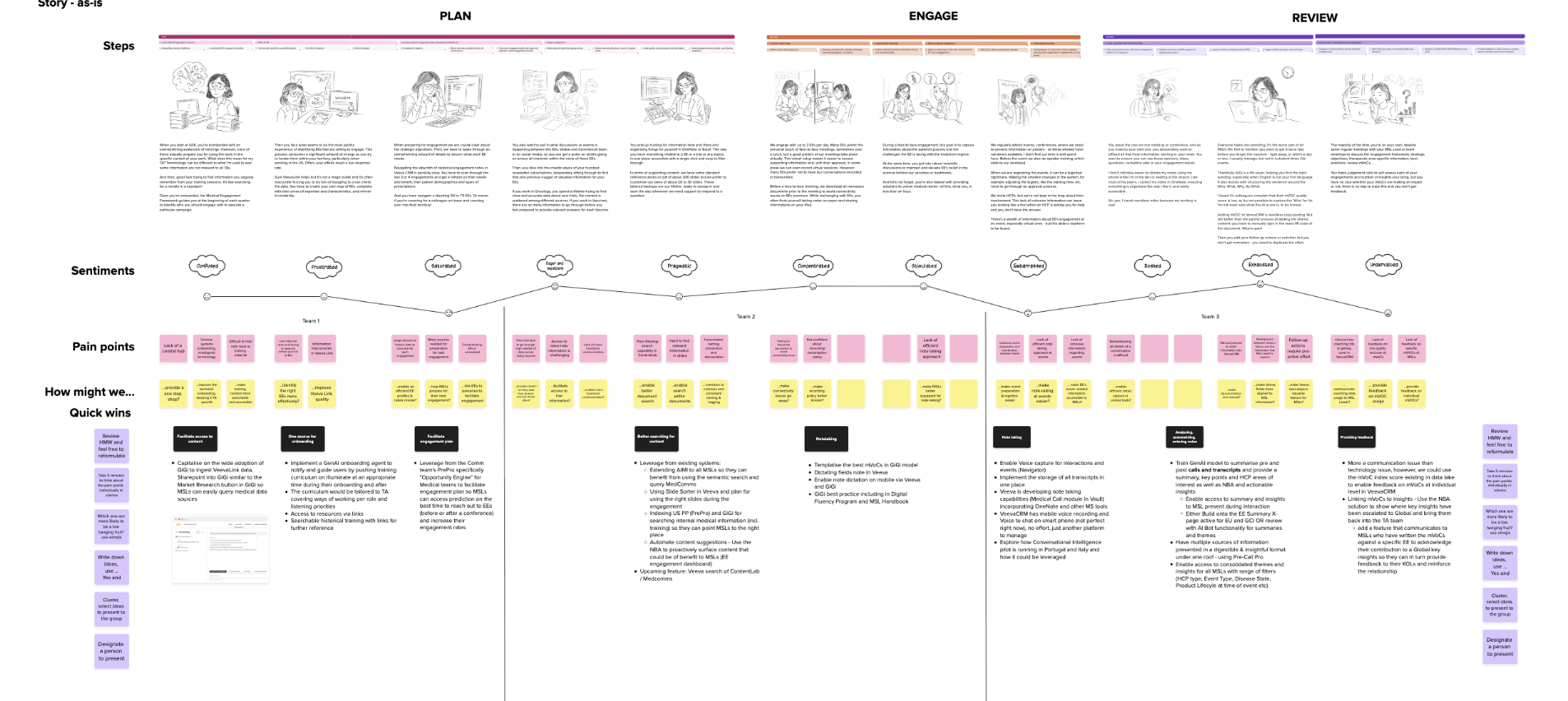
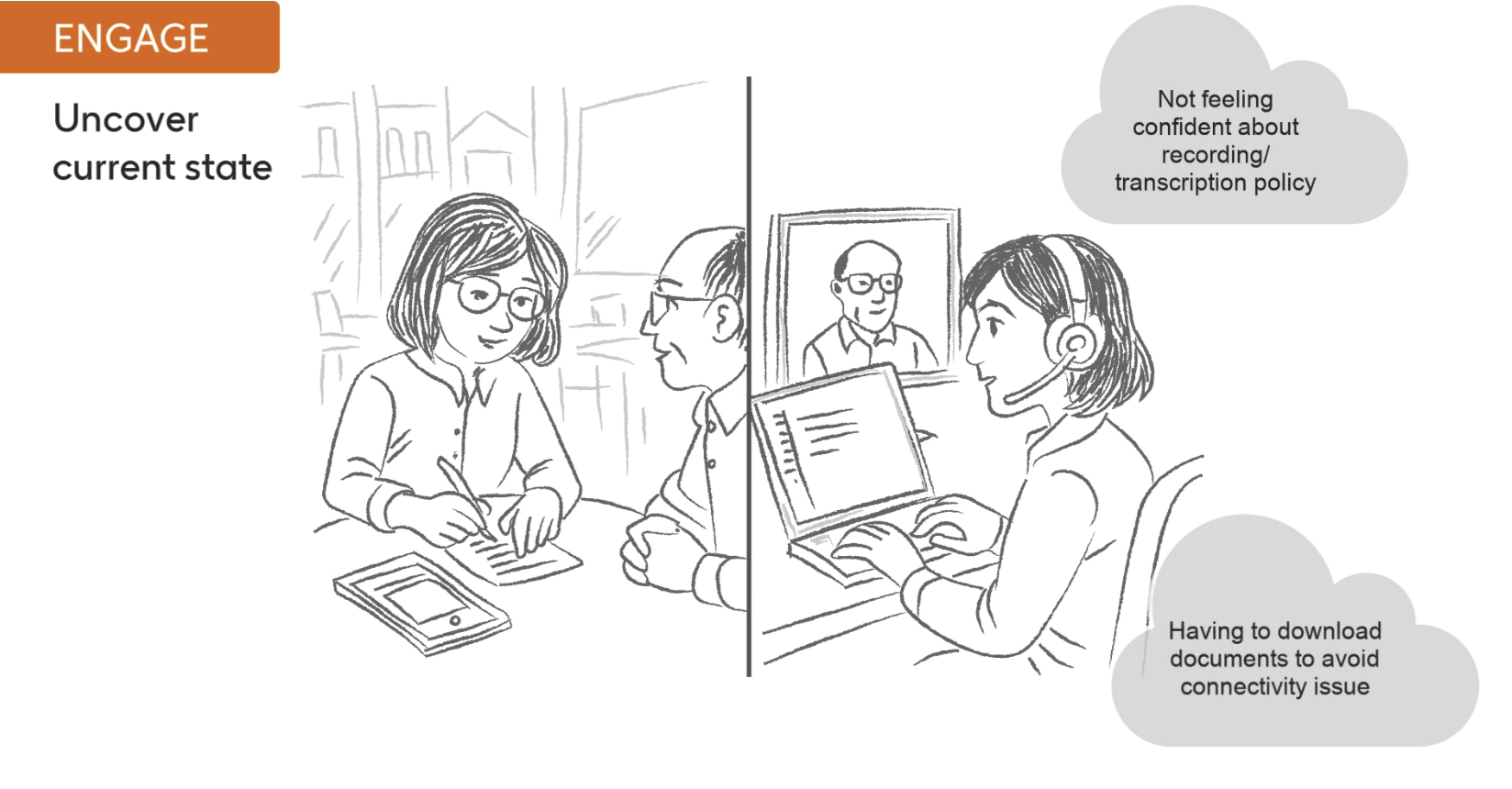
- To help ideation, we purposefully crafted a provocative “worst case scenario” story. This led ideation workshop participants to understand the urgency, with one participant saying, “If the situation is this bad, I’d quit.” As a result, a large set of opportunities was identified.
- To understand the impact of only scaling up existing best practices, we created an optimal “good practices” story and presented it to MSLs. As a result, we could balance net new ideas with existing practices.
- And to explore the art of the possible, we envisioned an “ideal future journey” during the 2nd ideation workshop. As a result, a north-star vision was created.
A multi-agentic north-star vision
The roadmap contained over 40 proposals, prioritized and laid out on various timescales, covering very specific usability issues as well as cross-tool integrations. But without our north-star vision, these proposals would still seem disjointed.
The north-star vision of a multi-agentic MSL AI assistant was proposed as an above-tool layer. It created a truly human-centered, holistic solution that tied the entire project together, from pain discovery through opportunity identification and beyond.
With a complex roadmap and a clear vision, the program team can now slice the identified opportunities in various ways. Several high-priority, no-cost quick wins can already be actioned, and specific, detailed discovery efforts can be initiated on other high-priority recommendations.

Nathalie Raux-Copin
UX Director
Summarizing research findings is a complex exercise, but one that can be tackled through illustrated, narrated storytelling— by crafting scenarios based on realistic events. This technique tends to engage audiences more emotionally, fostering the empathy needed to make them receptive to new ideas.